
Artificial intelligence at the service of collective intelligence.
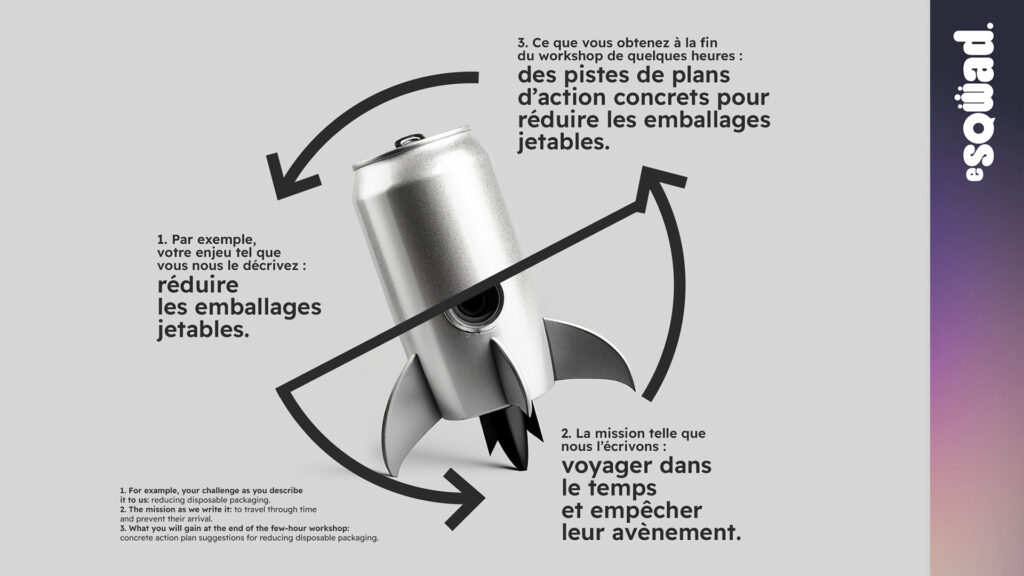
Transposing a challenge without distorting it: a balancing act
An effective eSqwad workshop depends first and foremost on the work done beforehand: that which consists of designing a tailor-made scenario, based on a concrete and real issue of the structure requesting the workshop.
This phase is crucial to allow the necessary step aside for a good immersion of the participants as well as discretion on the objectives of the structure, while maximizing the chances that it obtains concrete, actionable and accepted solutions.
But how do you move a story to another place, another time, or even another universe, without losing the soul of the original narrative? Here are some points of our method.
——————————-
1. We identify the essence of the story
First and foremost, we seek to understand what constitutes the core of the subject or the problem to be solved Its emotional core, its stakes, key relationships. That's what we'll have to preserve, regardless of the new setting.
Here are some questions we are basing our analysis on:
- What is the main dynamic of the issue?
- What are the fundamental values or tensions? ?
- Why is the situation the way it is?
——————————-
2. We choose a new context consistent with the real issue
Once the fuel is removed, we can choose a new frame. The important thing is that this frame can to accommodate the essential dimensions of the real problem without rendering them ineffective..
What we are looking for is not fidelity to detail, but loyalty to tensions..
Some things will inevitably have to change, but these changes will have to to serve to embark the participants, not to lose them or drown them. We are also very careful not to "impose" the new setting: it must integrate naturally into the logic of the story we want to transpose.
- If we add or remove elements, we always ask ourselves: "Does this change the fundamental meaning of the story?"
- If we reinvent the protagonists, we mustn't betray them. If they can change their external appearance, they must to remain bearers of the same tensions and the same objectives.
——————————-
3. We are vigilant against false leads
False leads can obscure the real issue and lead participants down a path that will prevent them from applying their solutions. Changing the context implies to anticipate what participants will focus on most within the newly chosen framework.
For example, having to fight resistance to change in a company of our time is not quite the same as having to fight resistance to change in a medieval society.
——————————-
4. We test our transposition on external players
We regularly have someone unfamiliar with the original subject read our mission statement. If they understand the real issues and are interested in the mission, That's when the magic happens.But there's no magic formula for that, only hard work!
——————————-
😇 😇 So, if you too would like to try it out or simply find out more, contact us here or on esqwad.com.
Whether you are an NGO, a company with a CSR policy or a local authority, if you share our conviction that innovation and collective intelligence are powerful levers for a sustainable future, we are meant to meet!
Article published on April 18, 2025